Full-Endoscopic Spine Surgery for Conway, South Carolina Patients
Between the university, the school district and the construction trades, Conway sends every kind of back to the same recommendation. Here is the smaller operation, described step by step and priced.


Quick Answer
A full-endoscopic decompression runs through one working channel and takes roughly an hour at a single level, leaving behind no screws, rods, plates, cages or fusion. Most cases are performed awake, under local anesthesia with sedation, and patients are discharged the same day. Conway patients settle candidacy by sending imaging first.
When not to wait
New or worsening weakness in a leg or arm, numbness around the groin or inner thighs, or any
change in bladder or bowel control needs an emergency department the same day — not a mailed
imaging review. Those can be signs of cauda equina syndrome or spinal cord compression, and both
are treated as emergencies.
Key Takeaways

- Synergy Spine Center operates from one location, 457-E Bypass 123 in Seneca. Horry County patients travel to it, and nobody is asked to make that journey until their imaging has already been read.
- Full-endoscopic spine surgery reaches the nerve through a single channel and leaves the stabilizing bone and joint alone, which is why no hardware is implanted and no level is fused.
- Most cases are performed awake: sedation through an IV, local anesthetic along the track, and a patient who can answer questions while the root is being freed.
- Prices are published rather than estimated — $15,000 lumbar, $16,000 cervical, $6,000 percutaneous discectomy — covering surgeon, anesthesia, facility, standard supplies and routine follow-up. Medicare and BlueCross BlueShield are accepted.
- The first step is on the practice. A free MRI review answers whether a channel can reach your compression, and it answers it before you spend money or time on a trip.
Who ends up looking for something smaller than a fusion?
In Conway, an unusually mixed group. The town sits on the Waccamaw River just inland from the coast, and its economy leans on institutions rather than the tourist strip: Coastal Carolina University, the school district, Conway Medical Center, and the construction trades building housing for everyone arriving in Horry County. That produces a waiting room where groundskeepers and nursing assistants who lift all day sit beside faculty and administrators who have not lifted anything heavier than a laptop in twenty years. Both groups get handed the same word when the leg pain will not settle. Both are entitled to know whether full-endoscopic spine surgery could reach the same nerve with less taken apart.
Full-endoscopic spine surgery means the entire procedure is carried out through one working channel, with the endoscope’s camera and light traveling inside the body to the nerve root, so the surgeon removes the disc fragment, thickened ligament or bone spur that is crowding the root without dismantling the joint that keeps the level stable.
Working in healthcare changes the questions
For a lot of people here a fusion is not an abstraction. They work in the hospital or the nursing homes, they have watched patients come out of one, and they want the imaging explained rather than summarized. That instinct is the right one. Candidacy here is decided by anatomy: a compression that matches the symptoms you describe, sitting somewhere a channel can physically reach. A single-level fragment pressing on a nerve root is the clearest case. Instability across several levels, significant deformity, or hardware from a previous operation can each move the answer, and when they do you are told rather than booked. Dr. McMillan reads the study himself, which is why the answer comes back specific instead of general.
What actually happens during that hour in the room?
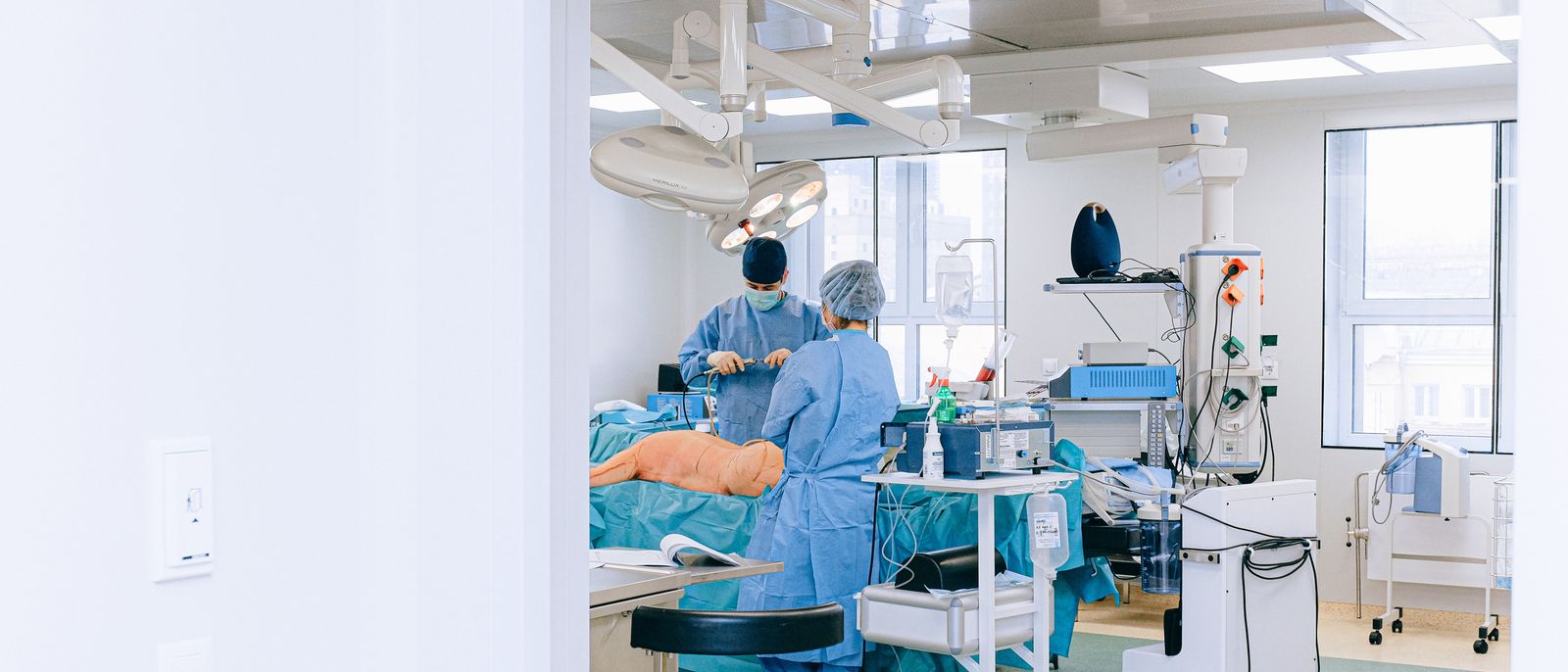
Most of the fear about this operation is fear of the unknown, so here is the shape of it. You arrive, change, and are positioned for the approach that was planned off your MRI. Monitors go on. Sedation begins through an IV, enough that you are comfortable and drowsy, and local anesthetic numbs the track the channel will follow. Imaging guidance sets the working channel at the right level and angle — from the side through the foramen for a transforaminal endoscopic discectomy, from behind between the laminae for an interlaminar decompression, or into the nerve exit itself for an endoscopic foraminotomy. Which one applies is decided by where your compression sits, not by preference.
Awake, and out the same day
The endoscope then travels down the channel, and the magnified, lit view on the screen is the surgeon’s view of your nerve root. What is crowding it comes out piece by piece while irrigation keeps the field clear. Because this is awake spine surgery rather than a general anesthetic, you can answer questions throughout, and being able to report what you feel while a root is freed gives the surgeon information an unconscious patient cannot. A single level generally runs about an hour. The portal is closed under one small dressing, you spend a stretch in recovery, and same-day discharge is the norm with someone else at the wheel. Coastal patients share one practical problem, which is that the whole length of I-26 sits between them and the office, and the Bluffton page works through the same overnight arithmetic from the other end of the Lowcountry.

How do you get a second opinion without burning a bridge?
Carefully, and more easily than people expect. The hesitation here is usually social rather than medical. You like your surgeon. You do not want to look ungrateful or difficult, especially in a town where you run into your doctor at the grocery store on Saturday. So people schedule operations they privately doubt. Nothing about a second read is an accusation. Surgeons request them from each other constantly, and a decision involving permanent hardware is exactly the sort that warrants one. You are also under no obligation to announce it: your imaging is your record, and you can request a copy without giving a reason.
Doubts you have not said out loud
A date is on the calendar. You have questions you have not asked, because asking felt like a challenge, and the answers you did get were general. Meanwhile the operation being planned puts metal in your back permanently and takes months to recover from.
Ask for the disc, not for permission
Request the images from the facility that took them. Records departments release studies to patients as a matter of routine. Send them for review, and Dr. McMillan reads the film himself and says which level is involved, whether it matches your symptoms and whether a channel can reach it. Nothing is charged and nothing is committed.
A better conversation with your own surgeon
Now you can go back with a specific question instead of a vague worry: what about my anatomy rules out a decompression? A good surgeon will answer it, and either you get a reason worth hearing or you get a smaller option worth taking. That is what a second opinion is for, and it is the one step here that cannot leave you worse off.
What do the ninety days after look like?
The overwhelming majority of it happens at home, not in the Upstate. You will not be driving yourself, so bring someone, and expect one night nearby rather than a long ride straight out of recovery. The first post-operative check happens before you head back to Horry County. After that, follow-up runs by phone and email, your own physician stays informed, and this office keeps calling patients back for months. What follows is the general arc of a recovery. Your specific restrictions are written for your level and the work you actually do.
One dressing, and rules that matter
A single adhesive dressing to look after, short walks several times a day, and firm limits on lifting, bending and twisting. Showering is usually cleared inside a day or two. Feeling good early is normal and is not permission to test anything. Pain that reproduces the original nerve symptom is a phone call rather than something to work through.
Add work back in measured steps
Driving usually resumes once nothing you are taking dulls reaction time. Classroom and office duties tend to return first; lifting, ladder work and long shifts on your feet come later and in increments. Numbness that fades slowly and a leg still building strength are both ordinary at this stage rather than signs of failure.
Back to the actual job
Clearance for grounds work, patient handling, framing or a full shift standing is decided individually, on the level treated, how long the root was compressed and how you move at your check. By this point the limit is usually stamina rather than the repair, and stamina has to be rebuilt deliberately. Bring your real job description to the consultation so the written restrictions match the work waiting for you.
Ask the imaging center for your study and send it. The read is free, the answer is specific, and nobody schedules a trip you should not make.
What is the honest comparison with a fusion?
The two operations treat the same complaint but disagree about how much has to be disturbed to do it. A fusion removes bone and joint on the way to the nerve, then rebuilds the segment with screws, rods and usually an interbody cage so it holds while it knits. A minimally invasive decompression through a channel takes out only what is pressing on the root and leaves the segment’s own structure carrying the load, so there is nothing to replace afterward. Anesthesia, admission, time in the room and the number you are quoted all follow from that. This is not a claim that the smaller operation is right for every spine. A segment that is genuinely unstable, or a deformity that needs correcting, calls for reconstruction and no preference changes it. The claim is narrower: rule the smaller one out on the film before hardware becomes permanent. Myrtle Beach patients start from the same Horry County imaging records and the same stretch of SC-22, while Union patients, close enough to come and go inside a day, arrive at the identical question about their own films.
| Full-endoscopic decompression | Open decompression with instrumented fusion | |
|---|---|---|
| Anesthesia | Usually local with sedation; the patient answers questions during it | General anesthesia |
| Getting in | A single working channel; muscle spread apart and left attached | An open incision, with muscle lifted off the bone |
| What is implanted | Nothing is implanted. No screws, no rods, no plate, no cage, no bone graft | Screws and rods, commonly with an interbody cage |
| Roughly how long, one level | About an hour | Longer, and it lengthens with every level added |
| Going home | Same-day discharge, as an outpatient | Usually admitted, with at least one night in hospital |
| What you are told it costs | A published 2026 bundled rate, quoted before you agree to anything | An estimate in parts, resolved after the statements arrive |
Use that as a set of questions rather than a verdict. Ask which line your own anatomy forces: instability, deformity, more than one level involved. If none of them apply to your film, the reason for the larger operation ought to be something a surgeon can name in a sentence, and you are entitled to hear it.
Which studies is any of this based on?
Named ones, which is not always true in this field. Ruetten and colleagues published a prospective, randomized, controlled study in Spine comparing full-endoscopic interlaminar and transforaminal lumbar discectomy against conventional microsurgical technique in patients with disc herniation. The same group published a separate randomized trial in the Journal of Neurosurgery: Spine examining the full-endoscopic interlaminar approach for lateral recess stenosis. Randomized assignment matters because it removes the surgeon’s ability to route easier cases toward a favored method. Synergy publishes the reference list it works from on the evidence page, including its stated position on epidural steroid injections, which it rarely performs, citing the FDA warning.
How far that evidence reaches
Only as far as the indications tested. For those, the endoscopic method produced results comparable to the conventional operation with fewer complications. Comparable is the word that carries the weight, and replacing it with anything stronger would be marketing. A randomized trial reports what happened to a group of patients who met specific criteria; it cannot forecast one person’s recovery, and nobody can. If you work in healthcare, none of this will surprise you. What the evidence justifies is a proper evaluation of the smaller operation before the larger one is scheduled. Nothing more, and nothing less.
The Bottom Line
Nobody should cross the state to find out they were never a candidate, and nobody should accept permanent hardware without hearing why the smaller option will not work. Both of those are settled by one free read of a scan you already own. Ask for your images, send them, and decide with real information.
Frequently Asked Questions
How long does it take to get there from Conway, and how many trips?
The drive from Conway to Seneca runs about 4 hours 20 minutes on SC-22, US-378, I-26, I-385 and US-123, and the aim is to make that journey once rather than repeatedly. Candidacy, cost and the plan are settled from your imaging before you leave Horry County, and later follow-up runs by telephone. Bring someone to drive and expect a night nearby.
My scan was done here in Horry County. How do I get a copy of it?
Records departments release imaging studies to patients on a written request as a matter of routine, so ask for the images on disc or as a download link rather than only for the written report. The review works from the pictures, not the paragraph. It is your record, and no reason has to be given for wanting it.
How is this different from a same-day laminectomy at a local hospital?
A laminectomy removes bone from the back of the canal through an open incision, while a full-endoscopic decompression reaches the same nerve down one working channel and leaves the stabilizing structures where they are. Both can relieve compression. The difference is how much has to be taken apart to do it, and whether anything has to be implanted afterward.
I am on Medicare. Does that change anything?
Medicare and BlueCross BlueShield are both accepted, and some patients still choose the published cash rate because it is a fixed figure rather than an estimate that resolves months after the operation. Which route serves you better depends on your plan, your deductible and where you sit in the plan year. Call (864) 886-9888 with the details.
Awake surgery sounds frightening. What does awake actually mean?
Awake here means sedated and comfortable with the track numbed, responsive enough to answer a question and describe what your leg is doing, and it does not mean watching your own operation. That live feedback is genuinely useful while a nerve is being freed. Whether it suits you is decided from your history at the anesthesia assessment.
What does the published price cover, and what falls outside it?
The published 2026 bundle covers the surgeon’s fee, anesthesia, the facility, standard supplies and routine post-operative follow-up, and the figure is quoted to you before you agree to anything. Outside it sit pre-operative labs if needed, typically under $200, pathology, imaging beyond what you provide, and prescriptions. Multiple levels, unusual anatomy or a revision after prior fusion are priced individually.
Which approach will I have?
Which approach you have is decided from your imaging before the day, according to where the compression sits and which side it is on rather than by preference once the case has started. A transforaminal approach comes in through the nerve exit; an interlaminar approach comes from behind between the laminae; a foraminotomy opens the exit itself.
What if I am not a candidate?
If the film rules an endoscopic approach out, you are told so plainly and told why, at your kitchen table rather than after a day of travel, and the review has cost you nothing. Some compressions cannot be reached down a single channel, and prior hardware, genuine instability or severe multi-level disease can each rule it out.
Does the practice do epidural steroid injections?
Synergy rarely performs epidural steroid injections and publishes that position rather than leaving it implied, citing the FDA warning about rare but serious neurologic events following epidural corticosteroid injection. That is the practice’s stated position rather than a universal rule. A diagnostic block used to find which structure generates pain is a different tool from a therapeutic steroid injection.
How soon after can I go back to teaching or to a shift on my feet?
Classroom and desk work often resume within days, while work spent on your feet, patient handling and construction take longer and are cleared individually rather than by a date on a calendar. The variables are the level treated, how long the root was compressed and how you move at follow-up. Bring your actual duties to the consultation.
How We Reviewed This Page
The clinical content here comes from Synergy Spine Center’s published procedure pages, its 2026 bundled rate card and Dr. McMillan’s documented training, patents and publication record, together with the peer-reviewed studies cited below, each confirmed against its PubMed entry. Where the practice holds a position rather than citing a study — its approach to epidural steroid injections, for instance — that is labeled as a position. Clinical review by Marion R. McMillan, MD, with the page revisited whenever pricing or procedure detail changes.
What’s new: September 2026 — first publication. Approach descriptions and 2026 bundled pricing checked against the published rate card.
References
- Ruetten S, Komp M, Merk H, Godolias G. Full-endoscopic interlaminar and transforaminal lumbar discectomy versus conventional microsurgical technique: a prospective, randomized, controlled study. Spine (Phila Pa 1976). 2008;33(9):931–939. https://pubmed.ncbi.nlm.nih.gov/18427312/
- Ruetten S, Komp M, Merk H, Godolias G. Full-endoscopic cervical posterior foraminotomy for the operation of lateral disc herniations using 5.9-mm endoscopes. Spine (Phila Pa 1976). 2008;33(9):940–948. Prospective, randomized, controlled study. https://pubmed.ncbi.nlm.nih.gov/18427313/
- Weinstein JN, Tosteson TD, Lurie JD, et al. Surgical vs nonoperative treatment for lumbar disk herniation: the Spine Patient Outcomes Research Trial (SPORT). JAMA. 2006;296(20):2441–2450. Randomized trial. https://pubmed.ncbi.nlm.nih.gov/17119140/
- McMillan MR. Method and apparatus for performing percutaneous laser disc decompression with vaporization monitoring by fluid displacement. United States Patent US 8,152,796 B2, issued April 10, 2012. https://patents.google.com/patent/US8152796B2/en
- Katz JN, Harris MB. Clinical practice. Lumbar spinal stenosis. N Engl J Med. 2008;358(8):818–825. https://pubmed.ncbi.nlm.nih.gov/18287604/
- Ruetten S, Komp M, Merk H, Godolias G. Surgical treatment for lumbar lateral recess stenosis with the full-endoscopic interlaminar approach versus conventional microsurgical technique: a prospective, randomized, controlled study. J Neurosurg Spine. 2009;10(5):476–485. https://pubmed.ncbi.nlm.nih.gov/19442011/
This page is general health information about full-endoscopic spine surgery, not medical advice, and reading it does not create a physician–patient relationship. Individual results vary, and candidacy is determined only after review of your imaging, history and examination. Prices shown are Synergy Spine Center’s published 2026 bundled cash rates and are subject to change; see published pricing for what is and is not included. Synergy Spine Center has one office, in Seneca, South Carolina, and treats Conway patients who travel to it. Always talk to a qualified clinician about your own care.